







Table of Contents
Someone is laughing at the dinner table, then one side of their smile drops and their words slur. What happens in the next few minutes can shape how well they recover. So, what is stroke, and why does it strike so suddenly? It is an interruption of blood flow to the brain, caused by a blocked artery or a burst vessel. In the UAE it is the leading cause of disability. This guide explains the types of stroke, what causes them, which warning signs to trust, and which risk factors you can actually change. Read it once, then share it.
TL;DR: Stroke happens when blood flow to part of the brain stops, either because an artery is blocked (ischemic stroke, the most common type) or a vessel bursts (hemorrhagic stroke, the most serious type). Causes include atherosclerosis, atrial fibrillation, aneurysms, and long-term high blood pressure. Diabetes, obesity, high cholesterol, and smoking add to the risk. Watch for the BE FAST signs, and call 999 right away, even if symptoms fade. Treatment depends on the type and works best when it starts early. Rehabilitation helps many people regain independence, and controlling blood pressure is one of the most effective ways to prevent a stroke.
Quick Answer:- A stroke happens when blood flow to part of the brain is suddenly cut off. An ischemic stroke is caused by a blockage and is the most common type. A hemorrhagic stroke is caused by a burst blood vessel. Warning signs include sudden loss of balance, vision changes, facial drooping, arm weakness, and slurred speech. Call emergency services immediately.
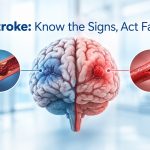
What is stroke? Stroke is a medical emergency in which the blood supply to part of the brain is interrupted, either by a blocked artery (ischemic stroke) or a ruptured blood vessel (hemorrhagic stroke). Brain cells then lose oxygen and nutrients, which can cause sudden problems with movement, speech, vision, balance, or thinking, and can lead to lasting disability or death without fast treatment.
What Is Stroke and Why Timing Matters
Your brain runs on a constant supply of blood. That blood carries oxygen and glucose, and brain cells store almost none of either. Cut the supply and cells start to die within minutes. That’s why emergency teams say “time is brain.”
In medical records you’ll sometimes see stroke called a cerebrovascular accident, or CVA. The name changes, but the mechanism doesn’t. Either something blocks blood from reaching the brain, or a vessel inside the brain ruptures and bleeds.
The local numbers are sobering. Cleveland Clinic Abu Dhabi reports that stroke is the leading cause of disability in the UAE and the third leading cause of death. The average age of a stroke patient here is 45, which is up to 20 years younger than the global average. The clinic links that early onset to common risk factors such as obesity, smoking, and diabetes, and estimates that about 25 percent of UAE adults live with high blood pressure.
The encouraging part is that fast emergency treatment can limit the damage and save lives. Most of what follows is about recognizing a stroke quickly and understanding why it happens.
Quick recap: Stroke is a sudden interruption of blood flow to the brain. It is a leading cause of disability in the UAE, it affects people younger than the global average, and speed of treatment shapes the outcome.
Types of Stroke
Doctors sort stroke by what goes wrong inside the blood vessel. The type matters because it decides the treatment. Treating a bleed like a clot, or the other way around, can make things worse.
Ischemic Stroke
Ischemic stroke is the most common type. Most international estimates put it at roughly 80 to 85 percent of all strokes. A vessel supplying the brain is blocked, and the tissue downstream is starved of blood. It can happen in a few ways:
- Thrombotic: a clot forms inside a brain artery that is already narrowed by fatty deposits.
- Embolic: a clot, or a piece of one, forms elsewhere in the body, travels to the brain, and gets stuck.
- Small vessel: tiny arteries deep in the brain become blocked. This is more likely in people with long-term untreated high blood pressure, diabetes, or high cholesterol.
- Unknown cause: in some people, testing doesn’t reveal a clear reason.
Hemorrhagic Stroke
A hemorrhagic stroke happens when a blood vessel in the brain bursts. Blood spills into the surrounding tissue, pressure builds inside the skull, and cells are damaged. Cleveland Clinic Abu Dhabi describes it as the most serious type of stroke.
Two subtypes are worth knowing. Intracerebral hemorrhage is bleeding inside the brain tissue itself. Subarachnoid hemorrhage is bleeding into the space between the brain and its outer covering, often from a ruptured aneurysm.
Transient Ischemic Attack (Mini Stroke)
A transient ischemic attack, or TIA, happens when blood supply to the brain is temporarily blocked. Symptoms can last from a few minutes up to 24 hours, and they fade without permanent brain damage.
Here’s the part people get wrong. “Mini” doesn’t mean minor. A TIA is a warning that a full stroke may follow, and it needs urgent medical assessment even if you feel completely fine an hour later.
Ischemic vs Hemorrhagic Stroke at a Glance
| Feature | Ischemic Stroke | Hemorrhagic Stroke |
|---|---|---|
| What happens | A blood vessel is blocked | A blood vessel bursts |
| How common | Most common type (about 80 to 85 percent worldwide) | Less common |
| Typical causes | Atherosclerosis, atrial fibrillation, clotting disorders, heart defects, microvascular disease | Aneurysm, brain tumor, moyamoya disease, long-term uncontrolled high blood pressure |
| Treatment goal | Restore blood flow quickly | Control bleeding and lower blood pressure |
| Common treatments | Clot-dissolving drugs, clot removal procedures | Blood pressure management, clotting support, surgery |
| Severity | Serious emergency | The most serious type |
Quick recap: Ischemic stroke is a blockage and hemorrhagic stroke is a bleed. A TIA is a temporary blockage that still deserves emergency care. The treatment for each is different, which is why brain imaging comes first.
Stroke Causes
Stroke causes depend on the type. Some are problems in the brain’s own vessels. Others start in the heart or the blood itself.
What Causes Ischemic Stroke
Ischemic strokes are usually caused by blood clots. Those clots tend to come from one of these sources:
- Atherosclerosis: fatty plaque builds up in artery walls, narrows them, and gives clots a place to form.
- Atrial fibrillation: an irregular heartbeat lets blood pool in the heart and clot. This is especially relevant when it is linked to sleep apnea.
- Clotting disorders: the blood clots more easily than it should.
- Heart defects: openings between heart chambers, such as an atrial septal defect or ventricular septal defect, can let clots slip through to the brain.
- Microvascular ischemic disease: damage to the smallest vessels in the brain restricts blood flow.
What Causes Hemorrhagic Stroke
Bleeding strokes usually trace back to a weakened vessel:
- Brain aneurysms: a bulge in an artery wall that can rupture.
- Brain tumors: growths that can damage nearby vessels.
- Vessel diseases: conditions such as moyamoya disease weaken or change the brain’s blood vessels.
- High blood pressure: especially when it’s uncontrolled or has lasted for years.
How the Causes Connect
Stroke rarely appears out of nowhere. There’s usually a chain. Excess weight and diabetes push blood pressure and cholesterol upward. Those damage the vessel lining and speed up atherosclerosis. Narrowed arteries then clot, or weakened ones rupture. Sleep apnea can feed into atrial fibrillation, which sends clots to the brain.
That’s good news in a practical sense. Break any link in the chain and your risk drops.
Quick recap: Clots from narrowed arteries, an irregular heartbeat, or blood that clots too easily cause ischemic stroke. Aneurysms, vessel disease, tumors, and long-term high blood pressure cause hemorrhagic stroke.
Stroke Risk Factors
Some risk factors are fixed. Many aren’t. Focus your energy on the second group.
| Risk Factor | Can You Change It? | Why It Matters |
|---|---|---|
| High blood pressure | Yes | Damages vessel walls and contributes to all types of stroke |
| High cholesterol | Yes | Feeds plaque buildup in arteries |
| Diabetes | Yes | Damages both large and small blood vessels |
| Obesity | Yes | Drives up blood pressure and diabetes risk |
| Smoking and tobacco use | Yes | Harms vessel walls and promotes clotting |
| Atrial fibrillation and sleep apnea | Treatable | Raise the chance of clots reaching the brain |
| Migraine headaches | Partly | Listed as a stroke risk factor by Cleveland Clinic Abu Dhabi |
| Age | No | Risk generally rises as you get older |
| Family history | No | May signal inherited vessel or clotting problems |
| Previous TIA or stroke | No | Signals a higher chance of another event |
An Illustrative Example
Picture a 46-year-old office worker in Abu Dhabi. She doesn’t smoke, feels fine, and hasn’t had a blood pressure check in three years. Her reading has been creeping up the whole time, with no symptoms. That’s how untreated hypertension works. It does quiet damage until the day it doesn’t stay quiet. This is a hypothetical scenario, but it matches the pattern the UAE data describes.
Who Should Get Checked Sooner
- Anyone with high blood pressure, diabetes, or high cholesterol
- People with a family history of stroke or early heart disease
- Smokers and people living with obesity
- Anyone who has had a TIA, even a brief one
- People who snore heavily or have been told they stop breathing in their sleep
Quick recap: High blood pressure, high cholesterol, diabetes, obesity, and smoking are the big changeable risks. In the UAE, they’re a main reason strokes happen at younger ages.
Warning Signs and the BE FAST Test
The main warning signs of stroke are easy to remember with BE FAST.
| Letter | What to Check | What It Looks Like |
|---|---|---|
| Balance | Sudden loss of balance or coordination | Stumbling, dizziness, can’t walk straight |
| Eyes | Vision changes | Double vision, trouble focusing, blurred sight |
| Face | Ask them to smile | One side of the face droops |
| Arms | Ask them to raise both arms | One arm drifts down or can’t lift |
| Speech | Ask them to repeat a sentence | Slurred, strange, or missing words |
| Time | Note when symptoms began | Call 999 immediately |
Other Signs to Take Seriously
- Sudden numbness or weakness on one side of the body
- Confusion or trouble understanding what people say
- Trouble finding words (a symptom called aphasia)
- A sudden, severe headache with no obvious cause, which can point to a bleed
Most strokes are painless, which is exactly why people wait. Don’t wait.
What to Do If You Suspect a Stroke
- Note the time. Write down when symptoms started, or when the person was last seen normal. Doctors use this to decide which treatments are safe.
- Call 999 right away. Don’t drive the person yourself.
- Keep them calm and still. Help them lie down or sit comfortably, and loosen tight clothing.
- Give nothing by mouth. No food, no drink, no tablets unless emergency responders tell you to.
- Share the details. Tell the paramedics the time, current medications (especially blood thinners), and known conditions.
Should You Call or Wait?
| Situation | What to Do |
|---|---|
| Face droop, arm weakness, or slurred speech, even if brief | Call 999 now |
| Symptoms appeared and disappeared within minutes | Still go to the emergency department (possible TIA) |
| Sudden, severe headache with vomiting or confusion | Call 999 (possible bleed) |
| High blood pressure reading but no symptoms | Book a doctor’s visit soon, and go to emergency if symptoms appear |
| Strong risk factors but feeling well | Schedule a screening and prevention plan |
Quick recap: BE FAST covers balance, eyes, face, arms, speech, and time. If any sign appears suddenly, call 999 immediately, even if it fades.
How Doctors Diagnose a Stroke
When a stroke is suspected, doctors work fast to confirm it and identify the type. Testing may include:
- CT scan or MRI scan: shows whether the problem is a clot or a bleed, and how much brain tissue is affected
- Blood tests: check clotting, blood sugar, and other markers
- Electrocardiogram (ECG): looks for heart rhythm problems such as atrial fibrillation
- Electroencephalogram (EEG): records the brain’s electrical activity
Brain imaging is the step that separates ischemic from hemorrhagic stroke. Everything else follows from it.
Stroke Treatment and Life After Stroke
Treatment depends on the type of stroke, when symptoms began, and the person’s overall health.
For ischemic stroke, the aim is to restore blood flow to the affected part of the brain as quickly as possible. Thrombolytic drugs dissolve existing clots, and they can only be given in the first few hours after symptoms start. In some patients with a blocked large vessel, doctors may also remove the clot with a procedure.
For hemorrhagic stroke, the aim is to reduce blood pressure to limit bleeding. Treatment may include blood pressure management, medicines that help blood clot, and surgery to relieve pressure inside the skull.
Recovery and Rehabilitation
Recovery looks different for everyone. Many people recover completely, while others live with physical limits such as trouble walking, problems with speech, or difficulty with daily tasks. Rehabilitation is where a lot of that ground is won back. Physical therapists rebuild strength and mobility, occupational therapists retrain everyday skills, and speech therapists work on communication. The goal is as much independence as possible.
Cleveland Clinic Abu Dhabi has been designated by the Department of Health as the official Stroke Center for Abu Dhabi, with a program that covers emergency treatment, evaluation, stabilization, and post-stroke rehabilitation.
Quick recap: Diagnosis starts with brain imaging. Ischemic stroke is treated by restoring blood flow, hemorrhagic stroke by controlling bleeding and pressure. Rehabilitation continues the recovery afterward.
How to Lower Your Stroke Risk
Prevention is mostly about the boring things done consistently.
- Get your blood pressure checked regularly. It’s the most common silent risk factor, and it drives both types of stroke.
- Manage diabetes and cholesterol with your doctor, including medicines when they’re needed.
- Stop smoking and avoid tobacco. This is one of the fastest ways to reduce vascular damage.
- Move most days. Regular activity helps blood pressure, weight, and blood sugar together.
- Eat for your arteries. Lean toward vegetables, fruit, whole grains, fish, and less salt and processed food.
- Treat sleep apnea and heart rhythm problems. If you snore loudly or wake exhausted, ask about a sleep study.
- Take TIAs seriously. A brief episode is your best advance warning.
Expert tip: Keep a simple home log of your blood pressure readings for two weeks before your appointment. A trend tells your doctor far more than a single reading in a busy clinic.
Common Mistakes and What Most People Misunderstand
Certain questions come up again and again in public health forums and community discussions. The same misunderstandings sit behind most of them.
“It went away, so it wasn’t a stroke.” Symptoms that fade are the hallmark of a TIA. It’s a warning, not a false alarm.
“I’m too young.” Not in the UAE. With an average stroke patient age of 45, younger adults with high blood pressure, diabetes, or smoking habits are squarely in the risk group.
“I’ll sleep it off.” Waiting is the most costly mistake. Treatment options narrow with every hour.
“Let me drive them to the hospital.” An ambulance starts care on the way and alerts the stroke team before you arrive.
“Give them an aspirin.” Don’t. If the stroke is a bleed, aspirin can make it worse. Leave medication decisions to doctors.
“A stroke and a heart attack are the same.” They’re related, since both involve blood vessels, but one affects the brain and the other affects the heart.
What experienced patients and caregivers recommend: learn BE FAST, keep a list of medications on your phone, tell family which hospital you’d want, and never treat a passing symptom as nothing.
People Also Ask
What is the main cause of stroke?
Most strokes are ischemic and are caused by a blood clot blocking a vessel to the brain. Atherosclerosis and atrial fibrillation are common sources. Long-term high blood pressure is the leading risk factor behind both clots and bleeds.
What are the warning signs of a stroke?
Sudden loss of balance, vision problems, a drooping face, a weak arm, and slurred speech. Remember them as BE FAST, and call 999 if any appear suddenly.
What is the difference between ischemic and hemorrhagic stroke?
Ischemic stroke is caused by a blocked blood vessel. Hemorrhagic stroke is caused by a burst blood vessel that bleeds into the brain. Treatments differ, so imaging is needed first.
What is a mini stroke?
A TIA, or transient ischemic attack, is a temporary blockage of blood flow to the brain. Symptoms fade, but it signals a higher risk of a full stroke and needs urgent care.
Which type of stroke is more dangerous?
Hemorrhagic stroke is considered the most serious type, but both are emergencies. Outcomes depend on the location, size, and how quickly treatment starts.
How is a stroke diagnosed?
Doctors use a CT or MRI scan to see the brain, plus blood tests and an ECG. Some patients also have an EEG.
Can you have a stroke without knowing?
Yes. Some small strokes cause subtle or brief symptoms that people dismiss. Regular checks of blood pressure, cholesterol, and heart rhythm help catch the underlying causes.
What should you do if someone is having a stroke?
Call 999, note the time symptoms began, keep the person still and comfortable, and give nothing to eat, drink, or swallow.
FAQs
Can young people have a stroke?
Yes. In the UAE, the average age of a stroke patient is 45, up to 20 years younger than the global average. Cleveland Clinic Abu Dhabi links this to widespread risk factors that can be changed, including obesity, smoking, diabetes, and high blood pressure. Stroke can also occur in younger people because of heart defects, clotting disorders, or vessel problems that were present from birth. If you’re under 50 and notice sudden weakness, speech trouble, or vision changes, treat it as an emergency. Age doesn’t rule a stroke out, and delays are more likely when people assume they’re too young.
Can stroke be prevented?
Many strokes can be prevented, or at least made less likely. Controlling blood pressure has the biggest impact, followed by managing cholesterol and diabetes, quitting smoking, staying active, and keeping a healthy weight. Treating atrial fibrillation and sleep apnea also lowers the chance of clots reaching the brain. Some risk factors, such as age and family history, can’t be changed, so regular screening becomes more important the more of them you have. Prevention isn’t a guarantee, but it shifts the odds significantly in your favor, and it’s far easier than recovering from a stroke.
How long do you have to get treatment?
Only a few hours. Clot-dissolving drugs for ischemic stroke can only be given in the first few hours after symptoms begin, and the earlier they’re given, the more brain tissue can be saved. That’s why noting the exact time symptoms started is so important. Hemorrhagic stroke also needs urgent care to control bleeding and blood pressure. Don’t wait for symptoms to worsen or to see if they pass. Call 999 as soon as you notice a BE FAST sign, and let the emergency team decide which treatment is safe.
Can you recover fully from a stroke?
Many people do. Recovery depends on the type of stroke, which part of the brain was affected, how quickly treatment started, and the person’s overall health. Some people are left with difficulty walking, speaking, or managing daily tasks. Rehabilitation with physical, occupational, and speech therapists can help rebuild strength, mobility, and confidence, and progress often continues over months. Family support matters too. Controlling blood pressure and other risk factors afterward helps protect against another stroke.
Stroke is sudden, but it is rarely random. Most cases trace back to a blocked artery or a weak vessel, and many of the conditions behind them, such as high blood pressure, diabetes, and smoking, can be managed. The most useful thing you can take from this guide is a habit: check the face, arms, and speech of anyone who suddenly seems off, and call for help without waiting to see if it passes. Then look after the quiet risks in your own life. A blood pressure check costs little, and the treatment window after a stroke is short. Both take minutes, and both can protect years.
Key Takeaways
- Stroke is a sudden interruption of blood flow to the brain, and it’s a medical emergency.
- Ischemic stroke (blockage) is the most common type. Hemorrhagic stroke (bleeding) is the most serious.
- A TIA is a warning sign, not a minor event.
- Atherosclerosis, atrial fibrillation, aneurysms, and uncontrolled high blood pressure are leading causes.
- In the UAE, the average stroke patient is 45, and around one in four adults lives with high blood pressure.
- BE FAST: balance, eyes, face, arms, speech, time. Call 999.
- Never delay, drive the patient yourself, or give aspirin or food.
- Rehabilitation and risk factor control are central to recovery and prevention.
يقدّم مستشفى كليفلاند كلينك أبوظبي رعاية متكاملة للسكتة الدماغية، بدءًا من التدخل الطارئ السريع وصولًا إلى برامج إعادة التأهيل التي تساعد المريض على استعادة الحركة والنطق والاستقلالية في حياته اليومية. وقد حدّدته دائرة الصحة أبوظبي كمركز السكتة الدماغية الرسمي في الإمارة، حيث يجد المرضى وعائلاتهم فريقًا متعدد التخصصات من أطباء وأخصائيي علاج طبيعي ووظيفي وعلاج نطق، وخطة علاج واضحة تناسب حالة كل شخص. لا تنتظروا ظهور الأعراض، فمتابعة ضغط الدم والسكري والكوليسترول والفحص المبكر قد تصنع فرقًا كبيرًا في حماية صحتكم.
للتواصل وحجز موعد، يمكنكم زيارة موقعنا الإلكتروني www.clevelandclinicabudhabi.ae أو الاتصال على الرقم 800 8 2223. عنواننا: 59 شارع حمودة بن علي الظاهري، جزيرة الماريه، أبوظبي، الإمارات العربية المتحدة. كما يمكنكم البحث عن كليفلاند كلينك أبوظبي في خرائط جوجل وملف النشاط التجاري على جوجل للوصول إلينا بسهولة ومعرفة الاتجاهات وأرقام التواصل.