






Table of Contents
In a retail environment where “greenwashing” has become a corporate art form, the word “organic” is frequently slapped onto labels with very little oversight. For a parent sitting at a laptop trying to choose an infant dress online, the sheer volume of claims can be paralyzing. Every brand promises purity, but very few are willing to show the receipts. Identifying real organic cotton clothing brands isn’t about intuition or price tags; it’s about knowing which technical markers to look for and understanding the physical properties of clean fiber.
The Non-Negotiable: Decoding the GOTS Certification
If you take only one piece of advice from this guide, let it be this: always look for the GOTS (Global Organic Textile Standard) seal. This is the gold standard for organic baby clothes globally. Unlike vague “eco-friendly” claims, GOTS is a farm-to-factory audit. The GOTS certificate ensures that at least 95% of the fibers are organic. Also, the processing, dyeing, and finishing stages meet rigorous environmental and social criteria.
When you are browsing for an infant dress online, don’t just look for a logo on the homepage. Dig into the product details. A legitimate brand will often list its GOTS license number. This number allows you to look them up in a public database to ensure their certification is active and valid. If a brand uses the word “organic” but cannot produce a certification number, they are likely using “organic-in-conversion” cotton or, worse, conventional cotton that has been lightly processed.
Material Integrity: Why Oeko-Tex Isn’t Enough
A common point of confusion when identifying organic cotton clothing brands is the Oeko-Tex Standard 100 label. While Oeko-Tex is an excellent certification, it is not an organic certification. It simply guarantees that the final product is free from harmful levels of toxic substances. A garment can be Oeko-Tex certified but still be made from conventional, pesticide-heavy cotton.
The Sensory Test: Identifying Quality Through Touch and Smell
While it’s harder to do when shopping for an infant dress online, the physical properties of the garment upon arrival are a dead giveaway of its origin.
- The Texture: Conventional cotton is often stripped of its natural waxes and then coated in silicone softeners to give it a “slick” feel. Genuine organic cotton has a different kind of softness; it’s more “buttery” and substantial. It has a natural weight and “grip” to it that synthetic-heavy blends lack.
- The Scent: High-volume, non-organic clothing often arrives with a sharp, slightly acidic, or “plastic” smell. This is the off-gassing of chemical finishes and heavy-metal dyes. Authentic organic baby clothes should have a neutral, earthy, or slightly sweet scent. If you open a package and it smells like a chemical plant, that is a red flag, regardless of what the label says.
- The Luster: There is no natural shine in organic cotton. But if you see a high shine in any cotton dress, then it means that it has likely been mercerized. Organic brands usually avoid this to maintain the fiber’s natural integrity.
Color and Dye: The Mellow Aesthetic
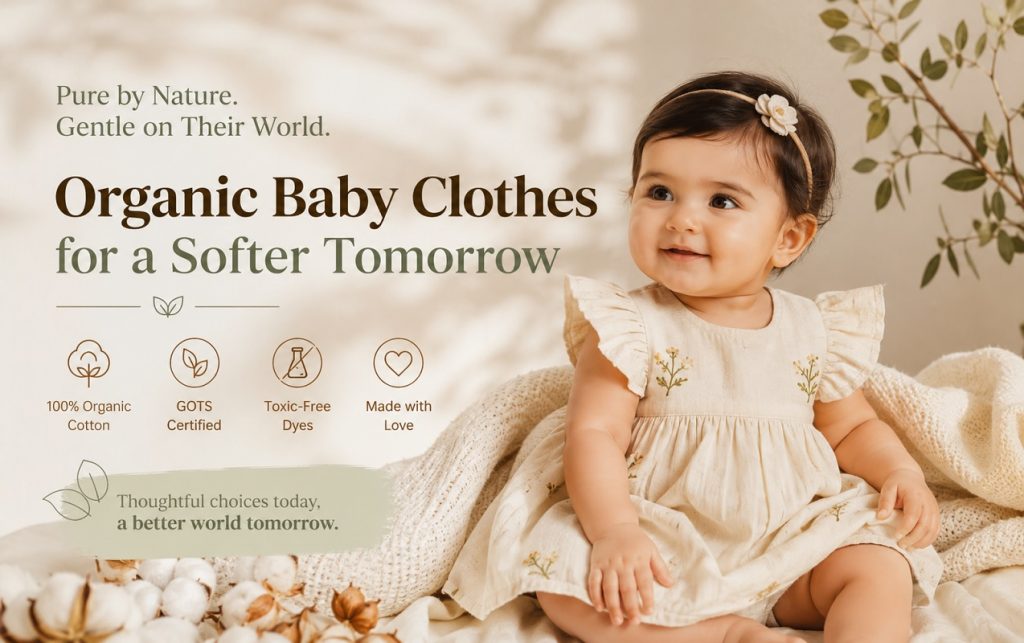
The visual identity of a brand can also be a tell-tale sign. Because GOTS-certified brands are restricted from using toxic, heavy-metal dyes, you will often find that the best organic cotton clothing brands lean toward a specific color palette. These are the “mellow” tones of ochres, sages, warm mochas, and soft creams.
Brilliant, neon, or “plastic” looking colors are incredibly difficult to achieve using organic-compliant dyes. When you see a brand embracing a more grounded, earthy aesthetic, it is usually a sign that they are working within the constraints of safe, non-toxic pigment systems.
Hardware and Finishing Details
Identifying organic clothing also means looking at what isn’t cotton. A brand that cares about organic fiber usually cares about the hardware. Check the product descriptions for:
- Nickel-free snaps: To prevent contact dermatitis and skin allergies.
- Coconut shell or wood buttons: Instead of petroleum-based plastics.
- Water-based prints: If there is a design on the fabric, it should be soft to the touch, not a thick, rubbery “sticker” (which is usually PVC-based plastisol).
The Mellow Muffin Commitment
At Mellow Muffin, we built our brand on the idea that “Love is the Luxury.” This means we don’t hide behind vague terminology. When you shop for an infant dress online through our collections, you are accessing garments that have been vetted at every stage. We use only GOTS-certified organic cotton because we know that “almost organic” isn’t good enough for a newborn’s skin.
Ultimately, identifying genuine organic baby clothes comes down to one thing: intentionality. A brand that is intentional about its cotton will be intentional about its certifications, its dyes, and its transparency. By looking for the GOTS seal, testing the sensory quality of the fabric, and favoring brands with an ethical “mellow” palette, you aren’t just buying a dress; you are investing in a cleaner, safer future for your child.